


/Case-Studies
Expandable Graphite for PA6
Processing temperatures above 250 degrees? Until now, this meant no chance for expandable graphite as a flame retardant additive! We took on this challenge together with LKT Erlangen-Nürnberg in the HiPeX project. The result: an expandable graphite for PA6 that demonstrates what is possible when research and application come together.
Project details
The HiPeX research project – New Generation Expandable Graphite for High Performance Materials – was carried out in cooperation with the Chair of Polymer Engineering (LKT) at the University of Erlangen-Nuremberg. The goal was to develop a new generation of expandable graphite, suitable as a halogen-free flame retardant additive for engineering plastics such as PA6. The focus was on defined start temperatures, improved processability, and the fulfilment of demanding flame retardancy standards such as UL 94 V-0. The practice-oriented development approach included material analysis, compounding trials, and transferring the results into application-oriented component tests.
Challenges
Early expanding expandable graphite led to processing issues and scrap in PA6; high filler contents weakened the mechanics.
Solutions
A new type of expandable graphite with a higher start temperature and synergistic additives enabled effective flame retardancy with improved processability.
Halogen-free Flame Retardancy for PA6: Our Journey with the HiPeX Project
Looking back, it was not just a research project, but a journey. A journey that pushed us at LUH to our limits – and beyond. The goal was to develop a halogen-free, powerful flame retardant solution based on expandable graphite, one that would convince even demanding applications such as PA6 in safety-critical sectors. The need was clear: Especially the automotive industry and manufacturers of technical plastics were searching for reliable alternatives to conventional, halogen-containing systems.
The Start: A Clear Challenge
Polyamide 6 has long been an essential component of modern lightweight applications – not least in the field of battery and electronic housings. Its high mechanical strength, heat resistance and good processability make it an ideal material for components that need to be lightweight, robust, and durable at the same time. But PA6 poses a challenge: flame retardancy. Especially in safety-relevant applications such as vehicle manufacturing, strict requirements apply:
- UL 94 V-0: The material must self-extinguish, without dripping or re-ignition
- Low heat release: Minimal energy should be released in the event of a fire
- Minimal smoke development: For the safety of occupants and emergency services
- Halogen-free & REACH compliance: Non-toxic, sustainable additives are mandatory
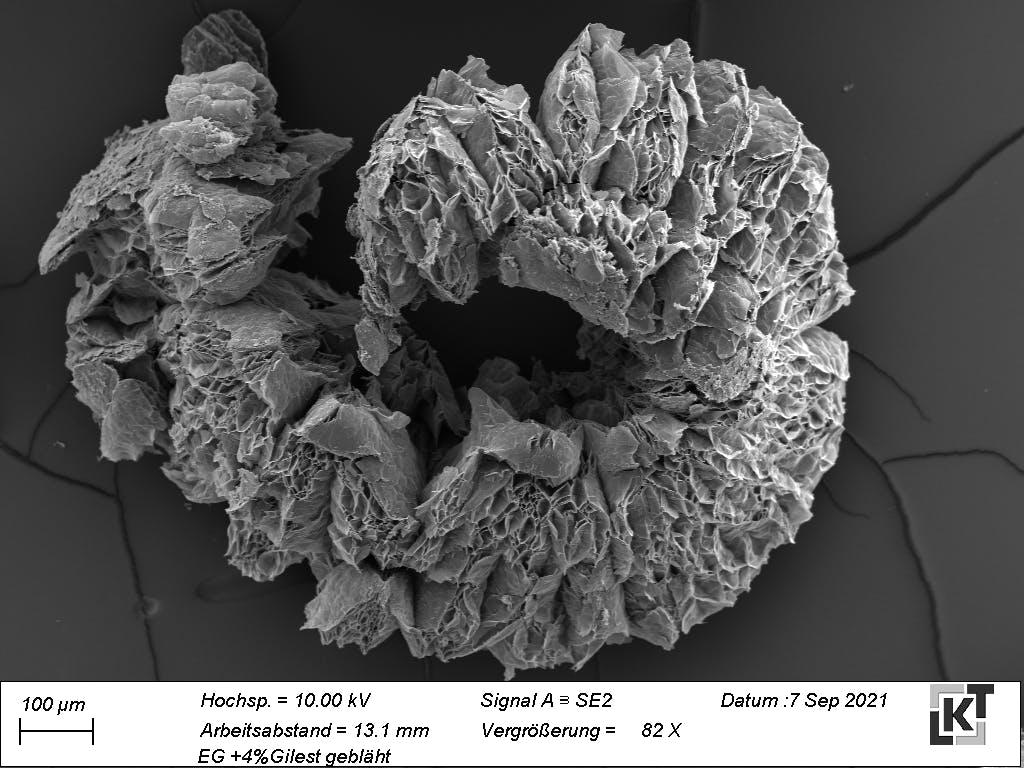
Over the years, we at LUH have gained excellent experience with expandable graphite in PUR systems and bitumen applications. However, we kept encountering the same barrier in customer discussions, as expandable graphite was not suitable for PA6 at the time. The use of expandable graphite as a flame retardant in thermoplastics like PA6 so far failed at a crucial point: The expansion onset of many standard expandable graphites is well below 250 °C – a range already undercut in PA6 processing. The problem: the graphite starts foaming already during compounding. The consequence: risk for both machine and material. What's more, the flame retardant effect is then lost.
HiPeX – A Project with a Clear Goal
With the ZIM collaborative project together with the Chair of Polymer Engineering at the University of Erlangen-Nuremberg, we wanted to change exactly this. We shared one objective: to develop a new, high-temperature-stable expandable graphite, specifically suitable for thermoplastics like PA6. From the outset, it was clear to us that we would make no compromises. Our product should:
- Be halogen-free and thus compliant with REACH and RoHS,
- Have a high expansion rate and intumescent effect,
- Be easy to compound without reacting prematurely,
- and at the same time enable mechanically stable, low-smoke materials.
Material Development: A New Chapter
The first lab-scale experiments showed: It is possible to specifically increase the onset temperature – to above 250 °C – while still maintaining the typical benefits of expandable graphite. But it quickly became clear: using expandable graphite alone was not enough. While about 25 percent expandable graphite achieved a UL 94 V-0 classification, this high filler content negatively impacted the mechanical properties and severely restricted options for additional additives.
The solution: the path via synergisms.
The Turning Point: Recognising and Using Synergies
In the next step, we deliberately tested combinations with aluminium diethyl phosphinate (AlPi) and melamine polyphosphate (MPP). The goal was to reduce the additive level while maintaining the same level of fire protection. And it worked: with just a 20 percent total filler content – a combination of EG, AlPi and MPP – we achieved the sought-after UL 94 V-0 rating.
Encouraged by these results, we took things a step further. In the automotive industry, glass fibre-reinforced plastics are standard. That’s why, in the third phase, we integrated 15 percent glass fibre into the compound structure. This created a new challenge, as glass fibres influence both fire behaviour and additive distribution within the material.
We therefore developed a special synergist formulation which also unfolds its full effect in combination with glass fibres. The result was a system that not only meets the highest flame retardancy standards, but is also convincing with regard to mechanical properties.
Fire Testing: The Ultimate Hardness Test
A project like HiPeX lives on verification. That’s why we confronted the most compelling arguments: standardised fire tests.
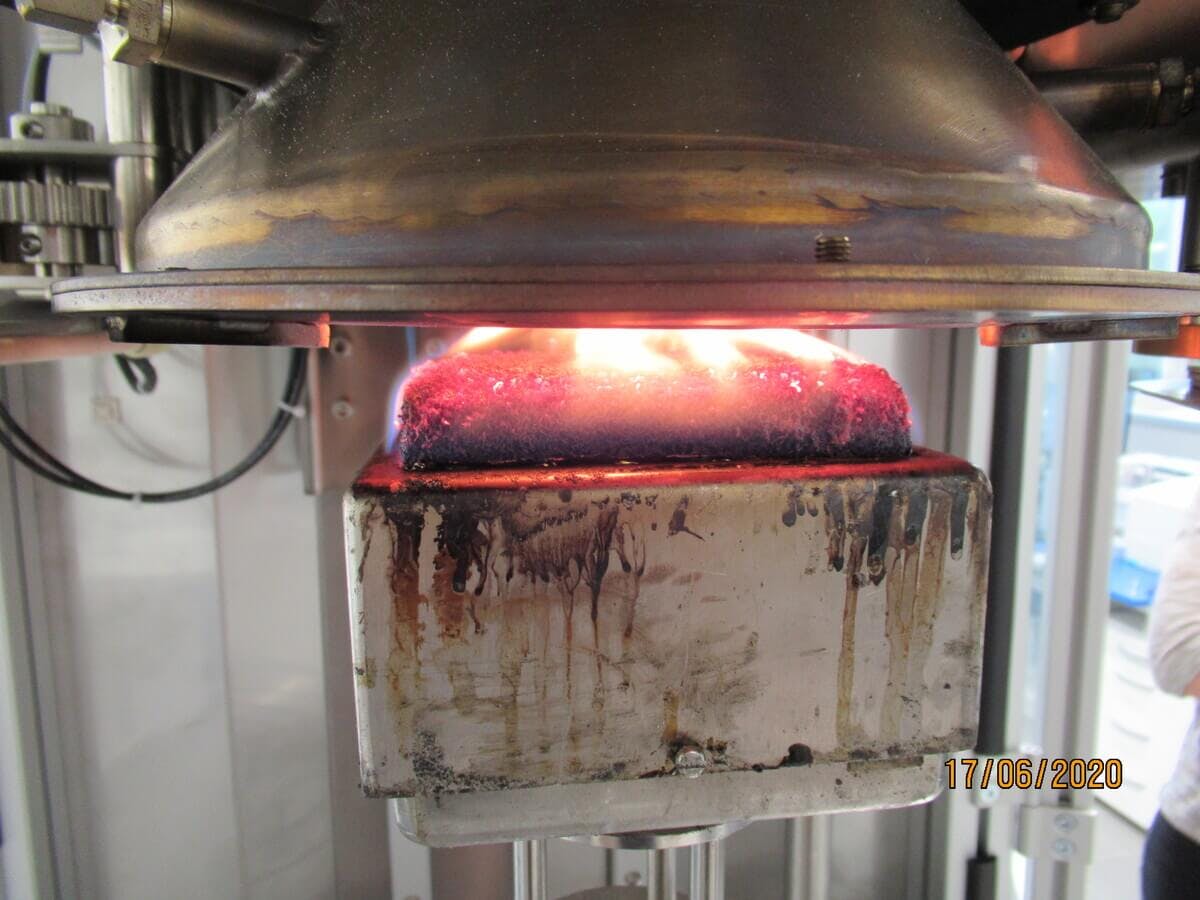
- In the cone calorimeter test according to ISO 5660-1, systems with expandable graphite and synergists demonstrated a reduction in heat release by more than 75 percent compared to standard PA6.
- The expansion of the graphite led to a stable protective layer, which significantly reduced oxygen ingress and thermal conduction.
- The vertical tests according to UL 94 also confirmed the performance: no dripping, no re-ignition, rapid self-extinguishing, even in glass fibre-reinforced compounds.
The solution was not just developed, but also successfully tested: Expandable graphite, especially in combination with AlPi and MPP, offers the best balance of flame retardancy, smoke suppression, and mechanical stability for safety-relevant PA6 components. Moreover, the additive is halogen-free, REACH and RoHS compliant, as well as mechanically durable. Overall, a thoroughly sustainable solution – with real added value for practical applications.
Results from Research and Practice
These findings are also demonstrated by scientific studies (e.g. FAU Erlangen-Nuremberg, Polymers 2021 & 2022), which confirm the high efficacy of our approach:
- Reduction of heat release by more than 80 % (from 648 to 120 kW/m² at 25 wt.-% EG)
- Achievement of the UL 94 V-0 classification with as little as 25 % EG or 20 % EG + 5 % AlPi/MPP
- LOI values up to 46 % – a top value for PA6 compounds
- Smoke development (TSP) of only about 1.2 m² – next to smoke-free
- Mechanical integrity even with vertical sample storage – the protective layer remained stable
The Added Value for Our Customers
The result of our research is more than just a new raw material. It is an application system tailored specifically to the requirements of safety-relevant PA6 components:
- Regulation compliant: halogen-free, REACH and RoHS compliant
- Efficient: Only 20–25 % additive content needed
- Multifunctional: Improved flowability, EMC protection, electrical conductivity
- Sustainable: Significant CO₂ savings compared to aluminium housings
What We Learned
The HiPeX project has impressively shown us that expandable graphite is far more than just an additive that foams under heat. It is a system material with enormous potential – if you are prepared to truly understand it. Its effectiveness depends not just on the raw material itself, but on the entire interplay: formulation, processing, application, testing methods.
At first, it seemed almost impossible to reliably use expandable graphite in polyamide 6. But through targeted modification, new measurement techniques, and close collaboration with research partners, we made it possible. Today, we know:
- That standard expandable graphites are not optimal for many applications, but can be specifically adapted with the right know-how. What was initially considered a knock-out criterion became, through our laboratory work, an achievable solution.
- That synergies make the difference. In combination with additives such as AlPi or MPP, expandable graphite can fulfil even the most demanding flame retardancy standards, like UL 94 V-0 or EN 45545, while maintaining high material stability.
- That performance must be thought of in multiple dimensions. It is not enough that a material does not burn; it must also be processable, remain stable, be reproducible, and permanently meet regulatory requirements.
- And above all: that expandable graphite can be the right solution for far more applications than initially assumed. Whether PA6, PUR, TPE, or other polymer systems – with the right strategy, new areas of application can be tapped and sustainable flame retardant solutions implemented.
And Today?
Today, GHL PX 95 HT 270 is no longer just a project result, but part of our product portfolio. An expandable graphite that was developed especially for technical thermoplastics like PA6; halogen-free, high-performing and sustainable. It shows what is possible when expertise, curiosity, and partnership come together.
The results of HiPeX are not the end for us, but the beginning of a new generation of materials. We are currently working on types of expandable graphite that only begin to expand above 300 °C, ideal for even more demanding technical thermoplastics such as PA66, which are used in structural components requiring particularly high heat resistance. The goal: Even thinner-walled components, even lower additive contents, even better processing, without compromising on safety.